Relationship anxiety is a persistent pattern of worry, doubt, and fear about your romantic relationship that can feel indistinguishable from a genuine signal to leave. Joel, MacDonald, and Page-Gould (2018) found that people simultaneously hold reasons to stay AND reasons to leave their relationships—and attachment anxiety amplifies both sides of that ambivalence. The urge to break up often coexists with an equally powerful urge to stay, which reflects attachment activation, not clarity.
This article will not tell you whether to stay or leave. What it will do is help you distinguish between attachment noise and genuine relationship red flags—so you can make the decision from a regulated, informed place rather than from a fear state. Approximately 40 to 58 percent of adults have insecure attachment patterns, which means the experience of questioning your relationship through an anxious lens is far more common than most people realize. If you have been wondering whether relationship anxiety ever goes away, the answer starts with understanding where the anxiety actually comes from.
Key takeaway: Relationship anxiety alone is not a breakup signal. It is usually an attachment pattern, not a relationship verdict. Research shows anxiously attached people simultaneously hold strong reasons to stay and leave. The key is distinguishing attachment-driven fear from genuine incompatibility using evidence-based frameworks and body-based self-assessment tools.
Why does relationship anxiety make you want to leave?
If you have ever mentally rehearsed a breakup conversation while simultaneously dreading losing your partner, your experience makes complete sense. Relationship anxiety triggers the urge to leave because your nervous system uses hyperactivating strategies—rumination, catastrophizing, and excessive reassurance-seeking—that create a false sense of urgency about your relationship. These strategies are designed to maintain proximity to your attachment figure, not to assess compatibility (Mikulincer and Shaver, 2016).
When your attachment system activates, your brain treats emotional distance the same way it treats physical danger. That familiar stomach drop when your partner seems distant? Your nervous system reads it as a threat to survival. In response, you may engage in what Levine and Heller (2010) call protest behaviors—threatening to leave, keeping score of perceived slights, or mentally rehearsing breakup conversations. These behaviors are attempts to re-establish connection, not evidence-based relationship assessments.
What makes this especially confusing is the "both/and" reality of attachment anxiety. Joel, MacDonald, and Page-Gould (2018) discovered that anxious individuals endorse stronger reasons to stay AND reasons to leave simultaneously. You are not flip-flopping because you are indecisive. Your attachment system is amplifying the emotional charge of the "leave" column without adding actual evidence to support it. Meanwhile, the "stay" column carries its own intensity—the deep pull toward your partner that keeps you locked in ambivalence.
If you find yourself overthinking your relationship or feeling anxious even when things are going well, this pattern is worth understanding before making any decisions.
The Ambivalence Inventory (for anxious attachment)
- Draw two columns on paper: "Reasons to Stay" and "Reasons to Leave"
- Write freely in both columns for 5 minutes—no filtering
- Read each item and rate its emotional charge from 1 to 10
- Now rate each item on evidence strength from 1 to 10
- Notice which items score high on emotion but low on evidence
- Circle items that are specific, observable, and persistent—these are your signal, not the emotional charge
This works for anxious attachment because it interrupts the hyperactivation cycle that blends emotional intensity with factual assessment. Your nervous system inflates the urgency of the "leave" column to provoke action—separating emotion from evidence reveals which concerns are attachment-driven and which reflect genuine relationship dynamics.
What is happening in your brain when you consider breaking up?
When you consider breaking up, your brain activates a threat-detection system calibrated by your attachment history—not your current relationship reality. For anxiously attached individuals, this means amygdala hyperreactivity—research shows that left amygdala response to angry faces correlates positively with anxious attachment, creating heightened sensitivity to social threat cues even in safe relationships (PMC6871466).
Beyond the amygdala, anxious attachment correlates with cortisol dysregulation—chronically elevated, flat cortisol profiles that keep your body in a persistent stress response (PMC4845754). Your body feels like something is wrong because your stress hormone system is calibrated to a higher baseline, not because your relationship is failing. Secure attachment, by contrast, is associated with lower baseline stress and moderate cortisol response.
Research also reveals that attachment anxiety alters activity in the posterior cingulate cortex, a brain region involved in emotional intensity estimation. Anxiously attached individuals show altered low-frequency fluctuations in the right PCC, which leads to over-estimating how significant emotional experiences are (BMC Neuroscience, 2021). A minor disagreement with your partner registers neurologically as something much larger.
Damasio's somatic marker hypothesis adds another layer: your body sends decision-making signals through physiological patterns—heart rate changes, skin conductance, gut feelings. These somatic markers guide choices before your conscious mind catches up. The problem is that anxious attachment can distort these signals, causing your body to flag general arousal as relationship danger. Learning to distinguish anxiety from intuition requires understanding how your nervous system shapes your attachment experience.
The Body Signal Check-In (somatic/body-based — for anxious attachment)
The goal of this practice is to build interoceptive awareness—the ability to read your body's signals without immediately assigning them meaning. It draws on Porges' concept of neuroception, your nervous system's below-conscious evaluation of safety and danger, and interoception training research (BioPsychoSocial Medicine).
Sit quietly and place one hand on your chest, one on your belly. For 30 seconds, simply observe: your heart rate, your breathing depth, any muscle tension. Name each sensation without interpreting it—"My chest feels tight" rather than "Something is wrong." Then ask yourself: "Is this sensation telling me about right now, or about a pattern from my past?" If it feels like a past pattern, practice labeling it: "This is my attachment system activating, not my relationship failing." Over time, this brief practice sharpens your ability to distinguish genuine gut feelings from attachment-driven threat responses.
Is it anxiety, ROCD, or genuine incompatibility?
The doubt can feel relentless—and exhausting. You may wonder whether something is genuinely wrong or whether your mind is stuck in a loop. These three experiences feel remarkably similar from the inside, but they have different sources, different patterns, and different solutions. Relationship OCD (ROCD) is a subtype of obsessive-compulsive disorder in which intrusive doubts about your relationship trigger compulsive behaviors like mental checking, reassurance-seeking, and comparing your partner to others (Doron et al., 2016).
Doron et al. (2016) found that ROCD clients held catastrophic beliefs about being "trapped in the wrong relationship" while simultaneously fearing being alone—a painful double bind. They appraised completely normal experiences—boredom during a quiet evening, stress during a disagreement—as evidence of fundamental incompatibility. The interference and distress from ROCD symptoms were comparable to other OCD subtypes, meaning this is a clinical condition, not simply overthinking.
A clinical rule of thumb from the ROCD treatment literature: if you are questioning whether your doubt is ROCD or a genuine signal, that meta-questioning itself is characteristic of ROCD patterns (Doron and Derby). Here are the three patterns distinguished:
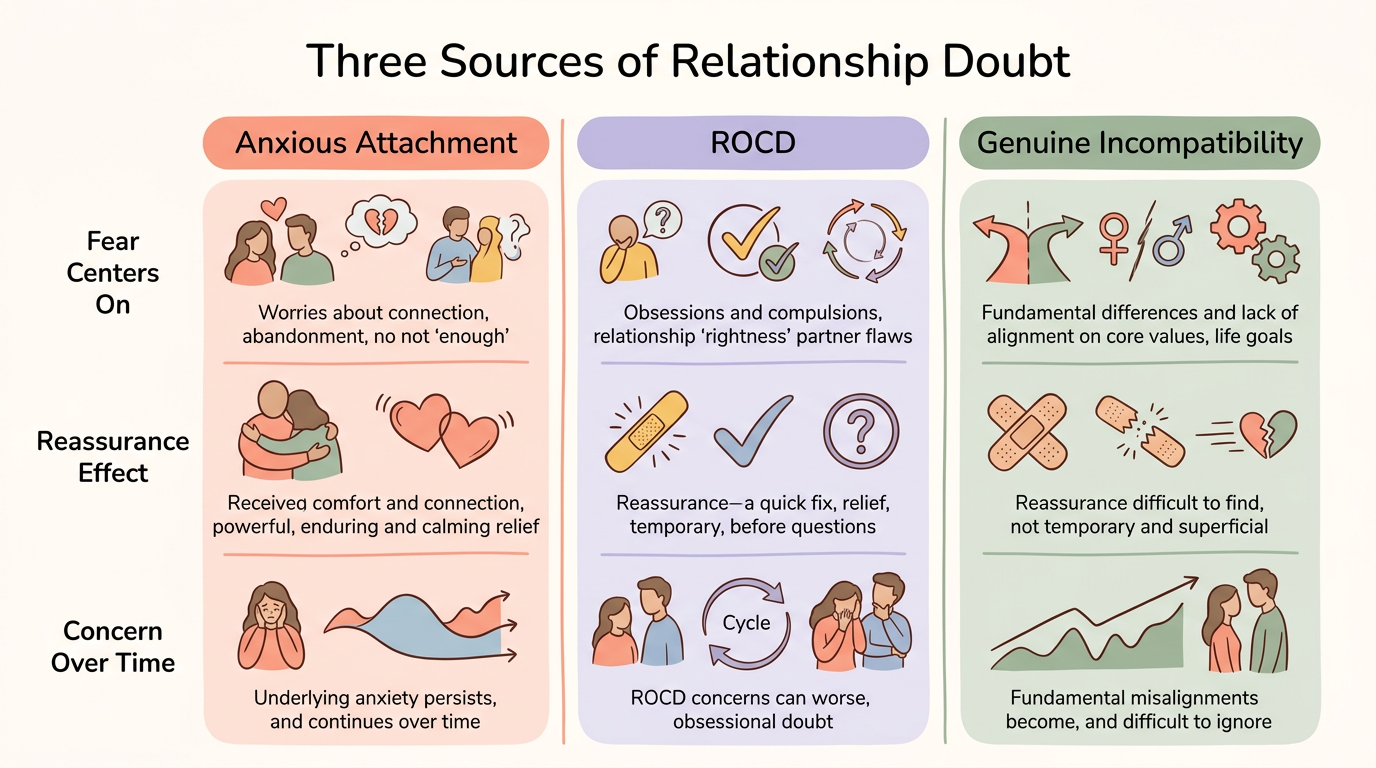
- Attachment anxiety: Fear centers on losing your partner. Reassurance helps temporarily but the worry returns. The core driver is an abandonment schema—your system is trying to prevent loss, not evaluate compatibility. Recognizing the signs of anxious attachment can help clarify whether this fits your pattern.
- ROCD: Fear centers on being with the "wrong" partner. Compulsive checking and reassurance provide momentary relief, then the doubt returns regardless of the answer—often shifting to a new concern entirely. The pattern is obsessive-compulsive, not attachment-driven.
- Genuine incompatibility: Concerns are specific, persistent, and stable across mood states. They do not shift with reassurance because they are grounded in observable patterns—values misalignment, consistent boundary violations, or fundamental needs going unmet.
The Reassurance Test (for anxious attachment and ROCD differentiation)
When the urge to break up arises, pause and notice: did this spike after a specific trigger, or did it seem to come from nowhere? Now imagine your partner perfectly reassured you right now—said exactly what you needed to hear. Would the feeling dissolve completely? Over the next few days, track whether the same doubt returns regardless of new evidence, and whether it shifts targets—first about attraction, then commitment, then compatibility.
If the feeling dissolves with reassurance but returns within hours, this points to attachment anxiety or ROCD rather than genuine incompatibility. This exercise draws on exposure and response prevention principles from Doron's ROCD framework—it interrupts the compulsive cycle by making the pattern visible rather than acting on it.
When IS anxiety actually telling you to leave?
Sometimes anxiety is the signal, not the noise. Gottman's longitudinal research identified four communication patterns—the Four Horsemen—that predict relationship failure with 94 percent accuracy. These patterns reflect genuine relationship toxicity, not attachment activation.
Your nervous system learned to be vigilant for good reason. That protective instinct deserves respect. And sometimes what it detects is real. The distinction lies in whether your distress points to attachment-driven distress (which originates in your history and follows you across relationships) or relationship-driven distress (which originates in the current dynamic and is specific to this partner's behavior).
Li and Chan's (2012) meta-analysis of 73 studies with 21,602 participants found that while both anxiety and avoidance negatively predicted relationship satisfaction, avoidance had a stronger negative link to satisfaction than anxiety. Anxious individuals could still find genuine value in their relationships when they felt appreciated. This suggests that anxious distress alone does not mean the relationship is failing—but distress combined with the Four Horsemen warrants serious attention.
Gottman's Four Horsemen: when anxiety points to real problems
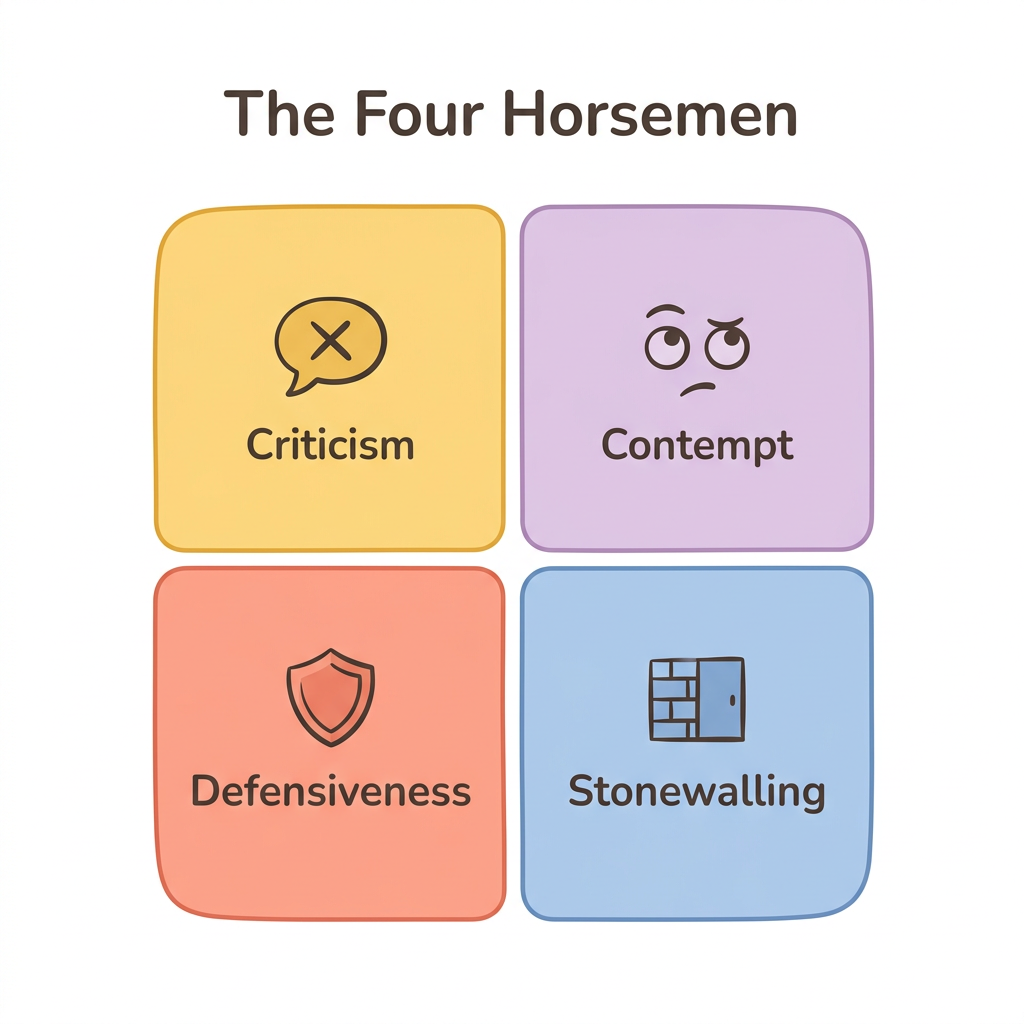
- Criticism: Attacking your partner's character ("You never think about anyone but yourself") rather than addressing a specific behavior ("I felt hurt when you forgot our plans")
- Contempt: Mockery, eye-rolling, name-calling, or sarcasm that communicates disgust and superiority—the single strongest predictor of relationship dissolution
- Defensiveness: Responding to complaints with counter-attacks or victim posturing instead of taking any accountability
- Stonewalling: Shutting down completely, withdrawing from interaction, refusing to engage—often a response to emotional flooding
The Security Filter (clinician-recommended — for all attachment styles)
- Identify your current relationship concern as specifically as you can
- Ask yourself: "Would I still be concerned about this if I felt completely emotionally secure?"
- If NO—the concern likely reflects your attachment system, not the relationship
- If YES—this may be a genuine compatibility concern worth exploring further
- Follow up: "Is this concern about a specific, observable pattern—or a feeling that shifts and morphs?"
- Specific, stable concerns about behavior patterns warrant direct attention. Shifting, morphing feelings point to attachment activation.
Secure individuals still have relationship concerns—but their concerns are grounded in observable evidence rather than threat-detection patterns from childhood. This filter helps you access that same evaluative clarity regardless of your attachment style. It works by temporarily removing the attachment variable so you can see the relationship more clearly.
How does your attachment style shape the stay/leave question?
Your attachment style determines whether "I should leave" is a protest behavior seeking reconnection, a deactivating strategy managing overwhelm, or a grounded assessment of incompatibility. An anxiously attached person's breakup urge is a protest behavior—a desperate attempt to re-establish connection by threatening withdrawal (Levine and Heller, 2010). An avoidantly attached person's breakup urge is a deactivating strategy—an attempt to manage emotional overwhelm by creating distance. These are opposite impulses wearing the same disguise.
Joel et al. (2021) found that stay/leave ambivalence predicted day-to-day fluctuations in commitment and breakup intentions, suggesting the "should I leave?" feeling is unstable and mood-dependent rather than a settled verdict. This is especially true for anxious and fearful-avoidant attachment, where emotional states can swing dramatically within hours.
Understanding your style-specific decision tree transforms the question from "should I leave?" to "what is my attachment system actually doing right now?" Here is how each style experiences the same dilemma differently:
| Dimension | Anxious Attachment | Avoidant Attachment | Fearful-Avoidant | Secure |
|---|---|---|---|---|
| What the urge feels like | "I need to leave before they leave me" | "I need space—this is too much" | Rapid alternation between both | "Something specific is not working" |
| What drives it | Protest behavior—an attempt to re-establish connection | Deactivating strategy—an attempt to manage emotional overwhelm | Oscillation between hyperactivation and deactivation | Grounded assessment of the relationship dynamic |
| When it peaks | After perceived rejection or distance | After increased intimacy or demands | Unpredictably—both closeness and distance trigger it | When specific, persistent issues go unaddressed |
| What helps | Self-soothing, 48-hour window, reassurance test | Gradual re-engagement, identifying deactivation triggers | Grounding first, then assessment from regulated state | Direct communication about the concern |
| Red flag to watch | Acting on the urge during emotional flooding | Using "I should leave" to avoid vulnerability | Making decisions during rapid cycling | Not applicable—secure assessment is generally trustworthy |
If you recognize the anxious-avoidant dynamic in your relationship, understanding the anxious-avoidant trap provides additional context for why the push-pull cycle makes the stay/leave question feel so impossible. For a deeper look at anxious attachment patterns, recognizing your style is the first step toward making decisions from awareness rather than reactivity.
The 48-Hour Window (for anxious attachment)
The reason this works is simple: anxious protest urges typically dissolve within 24 to 48 hours once the nervous system downregulates. The waiting period allows your sympathetic nervous system to settle so your prefrontal cortex—the part of your brain that weighs evidence and considers consequences—can assess the situation accurately.
When you feel the urge to break up, write down the urge and what triggered it—be as specific as possible. Commit to not acting on the urge or discussing it with your partner for 48 hours. During that window, use one self-soothing technique—slow breathing, bilateral tapping, or calling a trusted friend. After 48 hours, re-read what you wrote. If the urgency has dissolved, this was likely a protest behavior. If the concern remains steady with the same intensity, it warrants a calm conversation with your partner. Genuine concerns persist beyond regulation. Protest behaviors do not.
How can you make the decision from a regulated state?
You have probably noticed that the same relationship feels completely different depending on when you assess it—after a warm evening together versus after a tense silence. That gap is not indecisiveness. It is your nervous system filtering the same information through different autonomic states. You cannot make a sound relationship decision from a dysregulated nervous system. When your body is in a threat state, your perception narrows to danger-focused processing, filtering out positive information about your partner and your relationship.
Porges (2022) describes neuroception—the nervous system's below-conscious evaluation of safety and danger. Your neuroception is calibrated by past attachment experiences, which means it may signal "danger" in response to intimacy, vulnerability, or closeness that your adult self actually wants. Co-regulation through vocal prosody, facial expressions, and body language can shift your autonomic state from threat to safety, which is why making relationship decisions after a warm, connected conversation feels different from making them after a fight.
Emotionally Focused Therapy offers evidence that working with attachment dynamics produces real change. EFT research shows an effect size of d = 1.3—the largest of any couples intervention—with 64.5 to 73 percent of couples reaching recovery (Johnson et al.; ICEEFT). EFT works by helping partners identify the attachment needs beneath their protest behaviors and deactivating strategies, transforming negative cycles into secure connection. If your relationship distress involves a pursue-withdraw pattern, couples therapy grounded in attachment theory can help both partners build security.
Your nervous system learned its current settings for good reason—those settings kept you safe when you were young. And now you have the opportunity to update them. You do not rewire attachment in a single insight. You rewire it by noticing 10 percent earlier, responding 10 percent differently, 10 percent more often.
The Ventral Vagal Decision-Making Practice (somatic/body-based — for all attachment styles)
- Before making any relationship decision, activate your vagus nerve: inhale for 4 counts, exhale slowly for 6 counts. Repeat 5 times.
- Hum or vocalize gently for 30 seconds—this stimulates the ventral vagal pathway through the laryngeal muscles
- Notice the shift from chest tightness to openness, from rapid thoughts to slower processing
- Only from this regulated state, revisit your relationship concern
- Ask yourself: "Does this concern feel different from here?" Notice whether the urgency has changed, whether new information is available to you, whether your perspective has shifted
The ventral vagal state allows access to social engagement circuitry and rational assessment. Sympathetic activation—the fight-or-flight state—narrows perception to threat-focused processing. The decision that emerges from a regulated state is more trustworthy than the one that emerges from activation. This practice is rooted in Porges' polyvagal theory (2022) and takes less than two minutes. Use it before any significant relationship conversation.
When should you seek professional support?
Professional support becomes important when your anxiety patterns consistently interfere with your ability to function, connect, or make decisions. Seeking help is not a sign that something is wrong with you—it is a recognition that some patterns need more than self-help tools to shift.
Here are signs that professional support would be beneficial:
- Your anxiety significantly interferes with daily functioning—sleep, work, concentration
- You engage in compulsive reassurance-seeking or checking behaviors that match ROCD patterns—ERP (Exposure and Response Prevention) with an OCD-specialized therapist is the evidence-based treatment
- The same relationship fears have appeared across multiple relationships, suggesting the pattern predates the current partnership
- You or your partner consistently use contempt, stonewalling, or defensiveness—EFT for attachment-based couples work addresses these cycles directly
- You have been unable to make a stay/leave decision for more than six months despite honest reflection
Research shows that 70 to 75 percent of couples experience meaningful improvement through therapy. EFT specifically has a 64.5 to 73 percent recovery rate with an effect size of 1.3. When the pattern predates the relationship, individual therapy focused on attachment can help you understand what you are bringing to the dynamic so you can assess the relationship itself more clearly.
Frequently Asked Questions
How do I know if it's anxiety or if I should break up?
Anxiety-driven breakup urges fluctuate with your emotional state, dissolve after reassurance, and have appeared in past relationships too. Genuine incompatibility concerns are specific, stable across mood states, and center on observable behavior patterns rather than fear of abandonment or being with the "wrong" person.
Do I have relationship anxiety or am I not in love?
You can experience both at the same time—anxious individuals often love intensely while simultaneously fearing loss (Mikulincer and Shaver, 2007). If you feel drawn to your partner when calm but doubtful when stressed, anxiety is likely amplifying normal fluctuations. Persistent emotional flatness across all states may warrant deeper exploration with a therapist.
Is it ROCD or am I really unhappy?
If you keep asking yourself this exact question, that pattern itself is telling. ROCD involves obsessive doubting that returns regardless of evidence or reassurance, often cycling through different concerns (Doron et al., 2016). Real unhappiness is consistent, tied to specific issues, and does not shift targets. A clinical rule of thumb: the meta-questioning is characteristic of ROCD patterns.
Can relationship anxiety ruin a good relationship?
Yes. Unchecked attachment anxiety creates self-fulfilling prophecies—reassurance-seeking, protest behaviors, and hypervigilance can exhaust partners and erode trust. Li and Chan's (2012) meta-analysis confirmed that attachment anxiety predicts lower relationship satisfaction. With awareness, self-regulation skills, and sometimes therapy, anxious patterns can shift toward earned security.
What does relationship anxiety feel like physically?
Common physical symptoms include chest tightness, stomach knots, racing heart, shallow breathing, jaw clenching, and difficulty sleeping. Neuroscience shows anxious attachment correlates with elevated cortisol, amygdala hyperreactivity, and nervous system dysregulation—your body enters a threat response even without actual danger present.
Should I stay in a relationship that gives me anxiety?
Not necessarily—but anxiety alone is not a reason to leave either. Roughly 40 to 58 percent of adults have insecure attachment patterns that generate relationship anxiety regardless of partner quality. Evaluate whether the anxiety stems from your attachment system or from genuinely harmful relationship dynamics like Gottman's Four Horsemen: criticism, contempt, defensiveness, and stonewalling.
How long does relationship anxiety last?
Acute anxiety spikes typically resolve within 24 to 48 hours with self-regulation. Chronic relationship anxiety tied to attachment patterns may persist for months or years without intervention. With therapy—particularly EFT, which has a 64.5 to 73 percent recovery rate for couples—meaningful shifts can begin within three to six months of consistent work.
What are the signs of an unhealthy relationship vs. anxiety?
Unhealthy relationship signs are externally observable: consistent contempt, control, boundary violations, emotional or physical abuse, and refusal to address concerns. Anxiety signs are internally generated: rumination, catastrophizing, seeking reassurance about the same fears repeatedly. The key difference is whether the distress points to your partner's behavior or your nervous system's activation pattern.
Want to Go Deeper?
Meadow includes a structured assessment to help you understand your specific attachment patterns, followed by a 66-day program of daily practices designed to build earned security.
Start your free week →References
Attachment Theory and Research
-
Mikulincer, M., & Shaver, P. R. (2007). Attachment in adulthood: Structure, dynamics, and change. Guilford Press.
-
Mikulincer, M., & Shaver, P. R. (2016). Attachment in adulthood: Structure, dynamics, and change (2nd ed.). Guilford Press.
-
Levine, A., & Heller, R. (2010). Attached: The new science of adult attachment and how it can help you find—and keep—love. TarcherPerigee.
-
Li, T., & Chan, D. K. S. (2012). How anxious and avoidant attachment affect romantic relationship quality differently: A meta-analytic review. European Journal of Social Psychology, 42(4), 406–419.
-
Zhang, X., Li, J., Xie, F., Chen, X., Xu, W., & Hudson, N. W. (2022). The relationship between adult attachment and mental health: A meta-analysis. Journal of Personality and Social Psychology, 123(5), 1089–1137.
Stay/Leave Decision Research
-
Joel, S., MacDonald, G., & Page-Gould, E. (2018). Wanting to stay and wanting to go: Unpacking the content and structure of relationship stay/leave decision processes. Social Psychological and Personality Science, 9(6), 631–644.
-
Joel, S., Impett, E. A., Spielmann, S. S., & MacDonald, G. (2021). How interdependent are stay/leave experiences? On staying and leaving together. European Journal of Social Psychology, 51(1), 5–21.
Relationship OCD
-
Doron, G., Derby, D. S., Szepsenwol, O., & Talmor, D. (2016). Tainted love: Exploring relationship-centered obsessive-compulsive symptoms in two non-clinical cohorts. Frontiers in Psychiatry, 7, 58.
-
Doron, G., & Derby, D. S. ROCD assessment and treatment framework. rocd.net.
Couples Therapy and Intervention
-
Gottman, J. M., & Silver, N. The Four Horsemen: Recognizing criticism, contempt, defensiveness, and stonewalling. The Gottman Institute.
-
Johnson, S. M. Emotionally Focused Therapy research outcomes. International Centre for Excellence in Emotionally Focused Therapy (ICEEFT).
Neuroscience
-
Vrtička, P., Bondolfi, G., Sander, D., & Vuilleumier, P. (2012). The neural substrates of social emotion perception and regulation are modulated by adult attachment style. Social Neuroscience, 7(5), 473–493. PMC6871466.
-
Dewitte, M. (2011). Adult attachment and stress: Romantic relationships. In PMC4845754.
-
Ran, G., Zhang, Q., & Chen, X. (2021). Neural basis of attachment anxiety: A voxel-wise resting-state functional connectivity study. BMC Neuroscience, 22(1), 5.
-
Damasio, A. R. The somatic marker hypothesis and decision-making.
Polyvagal and Somatic Approaches
-
Porges, S. W. (2022). Polyvagal theory: A science of safety. Frontiers in Integrative Neuroscience, 16, 871227.
-
Interoception training and decision-making. BioPsychoSocial Medicine, 14, 13.
Clinical Frameworks
- Inner Summits. Relationship anxiety vs. incompatibility: The security filter self-assessment.
This article is for educational purposes only and is not a substitute for professional mental health advice, diagnosis, or treatment. If you are experiencing significant relationship distress, obsessive thoughts, or difficulty functioning, please consult a licensed mental health professional. If you are in an unsafe relationship, contact the National Domestic Violence Hotline at 1-800-799-7233.